

At PMI, research and development (R&D) catalyzes our business transformation. The rigor with which we conduct research—and the openness with which we share our methodologies and results—builds confidence in our science among the scientific community, regulators, and our consumers. This rigor and openness also protects our company from reputational risk, and, most importantly, allows us to commercialize our smoke-free products around the world and advance the debate on public health and tobacco harm reduction to the benefit of adult smokers.
PMIScience.com
PMIScience.com
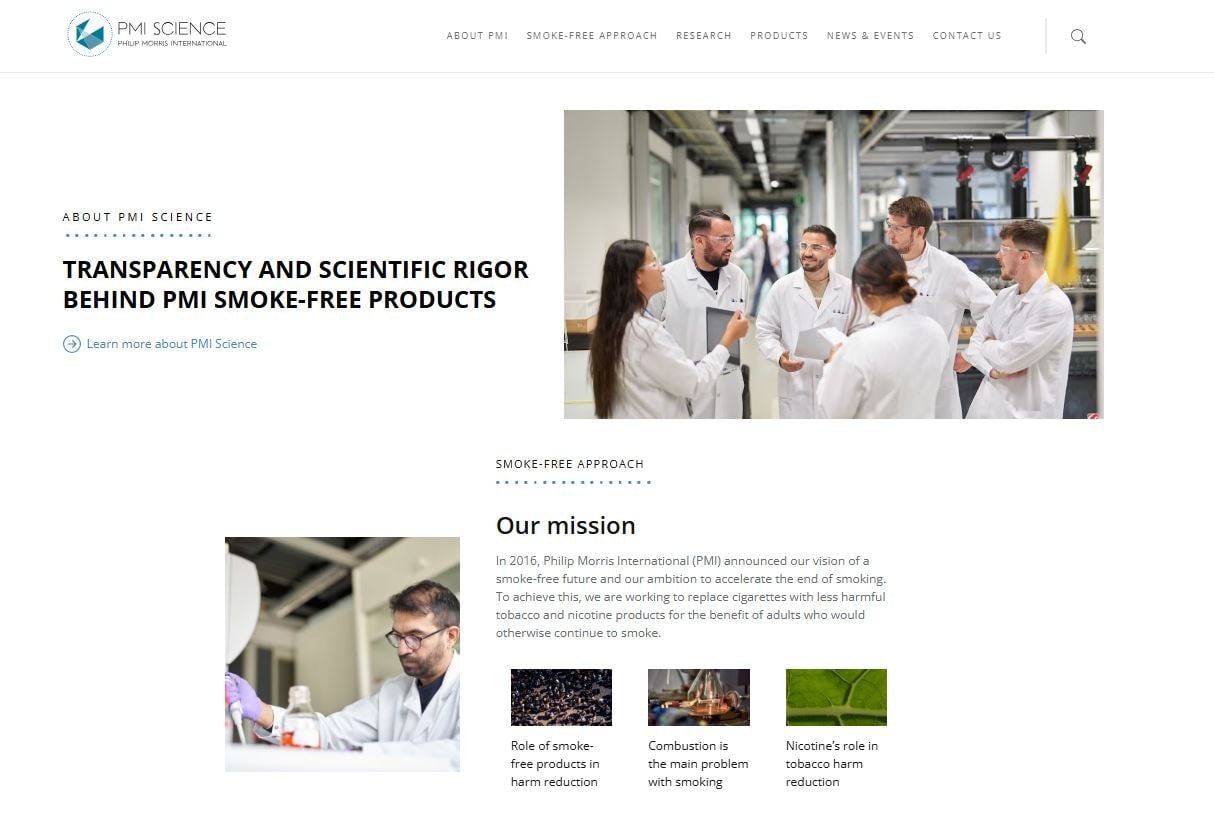
We have a dedicated website which summarizes our assessment program and the scientific work that is the foundation of our smoke-free products. Discover more at PMIScience.com.
Management
We review and update our strategy and long-range planning on an annual basis. Projects created based on this planning are governed by designated committees at product innovation, development and assessment,Company Management, and Board levels. Among other responsibilities, the Board’s Science and Technology Committee monitors the company’s internal scientific research, including efforts to establish and substantiate the health-harm reduction potential of our smoke-free products.
The importance of scientific rigor
Our R&D work is focused on developing and scientifically
substantiating smoke-free alternatives to cigarettes for adults
who would otherwise continue to smoke. An essential part of
our work is demonstrating that we have eliminated
combustion when it comes to our smoke-free alternatives.Scientific engagement: Sharing our methods and results
Regardless of industry, scientific research from a corporation may be met with skepticism. To address this and build trust, we share our science and listen carefully to feedback. We publish our findings in peer-reviewed articles or journals, conference presentations, and on PMIscience.com. We also produce a regular briefing through our Scientific Update publication which complements what we share throughout the year. In 2024, our 18th issue discussed how science-based regulation can foster innovation and encourage adult smokers to switch to less harmful alternatives, our 19th issue examined the role that nicotine has to play in tobacco harm reduction, and our 20th issue revisited the history of product development that led to the launch of the tobacco heating system. Since 2008, we have published 541 papers on smoke-free products and related science in peer-reviewed publications.
Nicotine research
Our approach to animal testing

This online content about our Integrated Report should be read in conjunction with PMI’s Integrated Report 2024. This report includes metrics that are subject to uncertainties due to inherent limitations in the nature and methods for data collection and measurement. The precision of different collection and measurement techniques may also vary. This report includes data or information obtained from external sources or third parties. Unless otherwise indicated, the data contained herein cover our operations worldwide for the full calendar year 2024 or reflect the status as of December 31, 2024. Where not specified, data comes from PMI financials, nonfinancials, or estimates.
Unless explicitly stated, the data, information, and aspirations in this report do not incorporate PMI’s wellness and healthcare business, Aspeya. Regarding the Swedish Match acquisition, completed late 2022, unless otherwise indicated, this report includes information pertaining to its sustainability performance. Please also refer to "This report at a glance" on page 2 of the PMI’s Integrated Report 2024 for more information. Aspirational targets and goals do not constitute financial projections, and achievement of future results is subject to risks, uncertainties and inaccurate assumptions, as outlined in our forward-looking and cautionary statements on page 206. In PMI’s Integrated Report 2024 and in related communications, the terms “materiality,” “material,” and similar terms are defined in the referenced sustainability standards and are not meant to correspond to the concept of materiality under the U.S. securities laws and/or disclosures required by the U.S. Securities and Exchange Commission.